
View this review at Noripcord.com
It's a pleasure to peek into the cognitive process of Takeshi Kitano, famous Japanese painter, actor author poet and director, as he jests at his own creativity in Glory to the Filmmaker! In a movie of self-centered analysis and introspection, Kitano delivers a few laughs along with an entirely sarcastic view of himself and film making worldwide.
The comedy pays homage to his life work, and crosses a broad range of filming styles common to Japanese film. There's the gangster movie, manzai comedy, J-horror, samurai sword-fighting, romance and sci-fi, each presented as though they were past ideas that eventually flopped. The persistent gag is a metal/paper dummy used as Kitanos' double in physically jeopardizing scenes. During these scenes the rest of the cast notices who's getting the better treatment while amusingly performing the stunts themselves.
He consistently includes himself in his movies as the main character, and makes further satire of his work by defying the accusation that he only makes movies of one genre, gangster flicks. It is a fact that in his earlier work he mostly portrayed the role of the gangster boss or die-hard Samurai. Consequently, in Glory to the Filmmaker! there is a ridiculous contrast in characters, with unusual roles like a drunken wife-beater, an impotent bodyguard and blind painter. One captivating aspect of his directing is how he makes action seem more authentic. He is known to shoot only one take, so as to take advantage of spontaneous events.
In 2007, the Venice Film Festival introduced a new award: the Glory to the Filmmaker Award, which was named after Kitanos's film. He was also its first recipient. This movie is a perfect introduction to the work of Takeshi Kitano, and sheds light into the way a mind like his works. His filmography is extensive: Zatōichi, Dolls, Violent Cop and Brother are already widely acclaimed masterpieces, and are all highly recommended.
10.10.08
Glory to the Filmmaker - Takeshi Kitano (2007)

7.10.08
Buraka Som Sistema - Black Diamond (2008)
View this Review at NoRipcord.com
Buraka Som Sistema appeared out of nowhere two years ago with the EP From Buraka to the World bringing Progressive Kuduro to the underground dance scene in Portugal. Since, they've become a virus, an international phenomenon with a new album Black Diamond out this summer '08. Buraka Som Sistema takes us on a ride through an ethnic myriad of music, from Africa to Brasil to London to Buraca, Amadora, a suburb of Lisbon.
Kuduro has its roots in Angola, and is more specifically a style of dance which evolved into a musical genre. Buraka Som Sistema, from the three electronic producers Lil'John, Riot and Condutor, is best characterized by imagining a techno beat performed by deep african drums and percussion, permeated with electronic glitches and powerful basslines.
Tracks like Kalemba (Wengue Wengue) top the charts, but others give light on how the style arose from traditional African dance. The strength of the drums in New Africas Pt. 2 are enough to make anyone break into spontaneous dance, such is their energetic density. Buraka Som Sistema has achieved new heights with Kuduro, fusing it with Brasilian Baile-Funk (Aqui para Vocês), London Grime (Black Diamond), and various other styles of electronica, all while maintaining a very earthly and authentic sound. The fusion aspect is most interesting, for it appeals to a wider audience and makes the experience more accessible.
Published by Enchufada and Sony BMG, Black Diamond has contributions from M.I.A., DJ Znobia, Saborosa, Puto Prata, Deize Tigrona, Pongo Love and Bruno M, adding to the mix of talented artists and messages delivered.
Ultimately, Kuduro is dance music. Home-listening is fine, but the real experience is live, with hundreds beating their feet in time and MC's chanting the party to even greater insanity. The album makes the blood boil and gives a good idea of what to expect at such an event. It's definitely worth a listen, if only to expand musical horizons and get a taste of other cultures.
5.10.08
London (2005)
How does it feel to be left by your girlfriend/boyfriend? What is the pain like? Have you ever tried to describe it? Are there different levels of pain? Is mine greater than yours? These are the questions posed by London, and makes for an interesting experience while trying to answer them.
Chris Evans portrays the shat upon boyfriend, who after six months of a break-up, is still having trouble dealing with the emotional pain. The story takes place mostly at his ex-girlfriends' going away party, which he decides to attend uninvited. He installs himself in the bathroom with Jason Stathams' character, a banker and part-time cocaine dealer, and they both consume vast amounts of drugs. We're led along the highs and lows of the relationship through a series of flashbacks and philosophical discussion.
Relationships are tough, they're never perfect. In several flashbacks we see the innocent, trodden boyfriend being a veritable jackass with his girlfriend while arguing on the topic faith/religion, in others we see him spoiling her with expensive gifts, unable to express himself otherwise. The two cocaine-addled minds revolving around this subject culminate in a "who suffers more" battle, which plays out interestingly. In the end, he emerges from the bathroom in an attempt once again to sway his beloved from leaving.
London succeeds in its relationship with the viewer, dealing with a subject most people can identify with. It suffocates the heart, brings waves of nostalgia for those who can relate, and makes an effort to use those cliché phrases we've all lived through. The message isn't uplifting, but in the end, a learning and thoughtful movie.

4.10.08
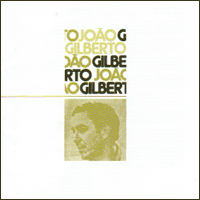
João Gilberto - White Album, João Gilberto (1973)
Anybody can recognize "The Girl From Ipanema", - it's a classic. But where did it come from? The Girl from Ipanema is Bossa Nova at its best, its rhythm, its Brasilian undulating sensual melody, but where did it originate, and why have such a fascinating sound?
Pianist Tom Jobim is credited for the composition of most of the classic Bossa Nova standards, but is was João Gilberto who took these standards, and interpreted on the guitar what we now identify as Bossa Nova. By harmonizing the chords on the guitar with the traditional Brazilian Samba rhythm, Gilberto evolved Jobims' compositions and popularized the style.
Gilberto's guitar playing is virtuous, but what really captures me is his voice. He sings with a throaty quality as if he is blowing air from his gut, which produces an intimate close-to-the-microphone sound. It's possible to hear his lips smacking dryly during the pronounciation of certain words, and he has an excellent vocal amplitude, using mostly low-pitched but well chosen notes. This creates the typical sensual, oh-so-attractive to female audiences sound that one instantly connects to the Brazilian people's warmth and the country's paradisical beaches.
This album is fun to compare to his other work, as over the years his performances have become more sensitive and refined. The harmonizations are well thought out (Gilberto is notorious for spending weeks picking out the perfect chord), and byt the time this album was recorded his voice already had that grandfather-like quality. Classics such as "Àguas de Março", "Falsa Baiana" and "Izaura" have amazing sound quality, comparable to todays' recordings.
If you can read Portuguese, or are able to find translations for the lyrics, you'll find that the lyrics complement the embracing sound - try finding accurate translations and read them whilst listening, and it will definitely heighten the pleasure of listening.
Create a playlist at MixPod.com


3.10.08
Bonobo - Dial 'M' For Monkey (2003)
Bonobo challenges the chillout industry with some smooth downtempo in Dial 'M' For Monkey, delivering quality tracks like "Noctuary" and "Flutter". This album carries a slow, measured ambience that caresses the soul.
Downtempo (or Downbeat) is a very laid-back style of electronic music, similar to ambient music. It's usually permeated with funky head bobbing rhythms, the stressed beat coinciding with the downtempo e.g. the first and third beat of every measure (a segment of time in musical notation). A counter example could be drum 'n bass or punk rock, where the beat corresponds to the uptempo.
Dial 'M' for Monkey makes use of looped jazz riffs and simple yet mesmerizing basslines, always letting the consumer retain more with each listen. In fact, Bonobo is best appreciated in its subtlety and "little" sounds. It's easy to listen to, as it has the tendency to migrate to the back of the mind, but it also has a lot of depth for those who are willing to pay close attention.
Every single track is high quality, one can listen to the album straight through without finding an exception. There is no such thing as the single. I find it hard to encounter other albums with this characteristic, so it's perfect for those times when I don't want to worry about what's next on the playlist.
Need a break from hectic rhythms? Fed up with annoying fast-paced music? Give this album a chance.

Create a playlist at MixPod.com

29.9.08
Meeting Resistance (2007)
Here is the truth in Iraq, this is the report on the Iraqui side of the story, this is the documentary we all want to see. Molly Bingham (US) and Steve Connors (UK) were two journalists able to document the opinions and view of eleven Iraqui Resistance fighters in the Adhamiyah neighborhood of Baghdad.
The journalists made sure all the resistors are all anonymous. Usually faceless or out-of-focus on camera. They are presented as nicknames: The Teacher, The Warrior, The Traveler, The Imam, The Wife, The Syrian, The Fugitive, The Local, The Republican Guard, The Lieutenant, and The Professor.
While not going into too much depth into each story, it's important to note the risk involved for these two journalists. Throughout the documentary, there are incidents of shocking violence which depict perfectly how the American soldiers are aggressors, and how their oppresive presence in Iraq has affected negatively the population.
One cannot help but feel sided with the Iraqui people. It makes perfect sense to defend your country against an invading military force. Admittedly at times I was put off by the religious factors of the conflict, because for many Iraquis, religion is their main motivation. For the majority, especially the interviewees, they are waging "Jihad", a religious war, and I find this aspect disputable. However, the religious aspect justifies its importance by ultimately becoming the uniting factor for the resisting population.
The documentary is real. Facts are facts, the American invasion is hated, and the resistance has wide popular support. The resistance is able to fund itself through that support and buy weapons to attack American military targets, all for the purpose of, ironically, liberating Iraq from the oppressors. So now here's the question: why are the American troops still there?

Before the Devil Knows You're Dead (2007)
What's the worst you can imagine? Before the Devil Knows You're Dead is going to challenge it. Through a nasty sequence of coincidences we watch the destruction of several lives, all derived from the characters' own willingness to descend into chaos.
The concept is driven by numerous flashbacks over the plot timeline, which revolves around the robbery of a jewelry store. The viewer is given little pieces of important information over time, with multiple perspectives on the events.
Philip Seymour Hoffman's perfomance as the evil, plotting and ultimately punished character is top notch. The calm decline into insanity of a broken man is represented in a way I've never seen before. Ethan Hawke's character is drawn into the plot for being the brother of the protagonist, and he is able to convey perfectly the frenetic mental perturbation involved. One cannot help but grow emotionally attached to the family of the two brothers, as Albert Finney upstages the rest of the cast as the father figure with an unstable desire for vengeance.

The film is quick-paced, and cuts between scenes are abrupt at times. Although this is understandable in view of the massive amount of information delivered, I felt at times the progression could have been more fluid. The jumping around the timeline felt a little exaggerated at times.
The concept is consistent, the plot is fascinating and I didn't notice two hours go by. I recommend at least a rental, as the replayability of the movie is pretty scarce.27.9.08
Ghost in the Shell (1996)
Em Português
This is one of those movies that I want to see more than three times. The narrative is well built, although difficult to understand at first.
The Japanese manga style is renovated, with a Bladerunner-esque dark environment, instead of the cheesy Pokémon style. It's worth to note that Ghost in the Shell was made before The Matrix, so most of the philosophical aspect of "GITS" was pretty new to the mainstream.

The main question in "Ghost in the Shell" is the separation man/machine, and the proper definition of Life. Since the movie is set in the near future, the humans have started to implant cybernetics into their bodies and brains. Both main characters are vestiges of humanity, authentic robots.
The following questions are posed:- How do we define Life? Is it having a conscience? Can a machine be self-conscious? Maybe organic cell counts have something to do with it.
- What are the rights of a Living Being? Can we give them to a machine?
- In the future, when we have a direct connection from our brains to the internet, how will we defend ourselves against hackers? Will a hacker be able to change/create/erase our memories, in effect plunging us into an alternate reality?Minotaur Shock - Maritime (2005)
Minotaur Shock will enter your life, and never leave. This album portrays perfectly some of the possible combinations between acoustic and electronic music. At first I couldn't believe that what I was hearing was electronic.

The composition is done mostly with drum machines with recorded woodwinds and guitar. The recorded acoustic tracks are then remixed and sychronized with the electronic components, resulting in a soothing easy-to-listen meditative sound.
I think the greatest appeal of this album is the way both electronic apologists and acoustic-lovers can retain interesting aspects from the composition. For example, some of the beats are a bit more complicated than the usual 4 by 4 rhythms used in similar styles, while the sound quality of the woodwinds is preserved impeccably."Muesli" is the kind of song you can listen to for hours. Of course I believe firmly the artist intended the album to be heard from beginning to end, as there is a sense of progression throughout.
Some songs to check out are "Hilly", and "(She's in) Drydock Now", if you like those three I mentioned, it's worth a buy.
Jamie Lidell - Multiply (2005)
When Multiply was released I believe something must have exploded supernova-like in outer space due to some cause and effect phenomena. This was my first experience listening to Jamie Lidell, though I had seen his name on the Warp website for sometime. I tried to listen to his other albums afterwards, but to be honest, I was quite disappointed!
Here Jamie has shook the ground with an attempt to recreate the early funk soul groove of the 70's and 80's. With tracks like "You got me up" and "When I come back Around" I felt like I was being taken back in time to the era of funk. I can imagine Otis Redding, Michael Jackson and James Brown trembling.
While it's by far the best album I've heard in years, in comparison to his earlier work, there's absolutely nothing in common. Anybody can listen to "Multiply" easily, but other Jamie Lidell albums are to be handled with care. Ultimately, this is a great buy, but not something to judge the artist entirely upon. Give a listen, you'll probably enjoy.


 Posts


